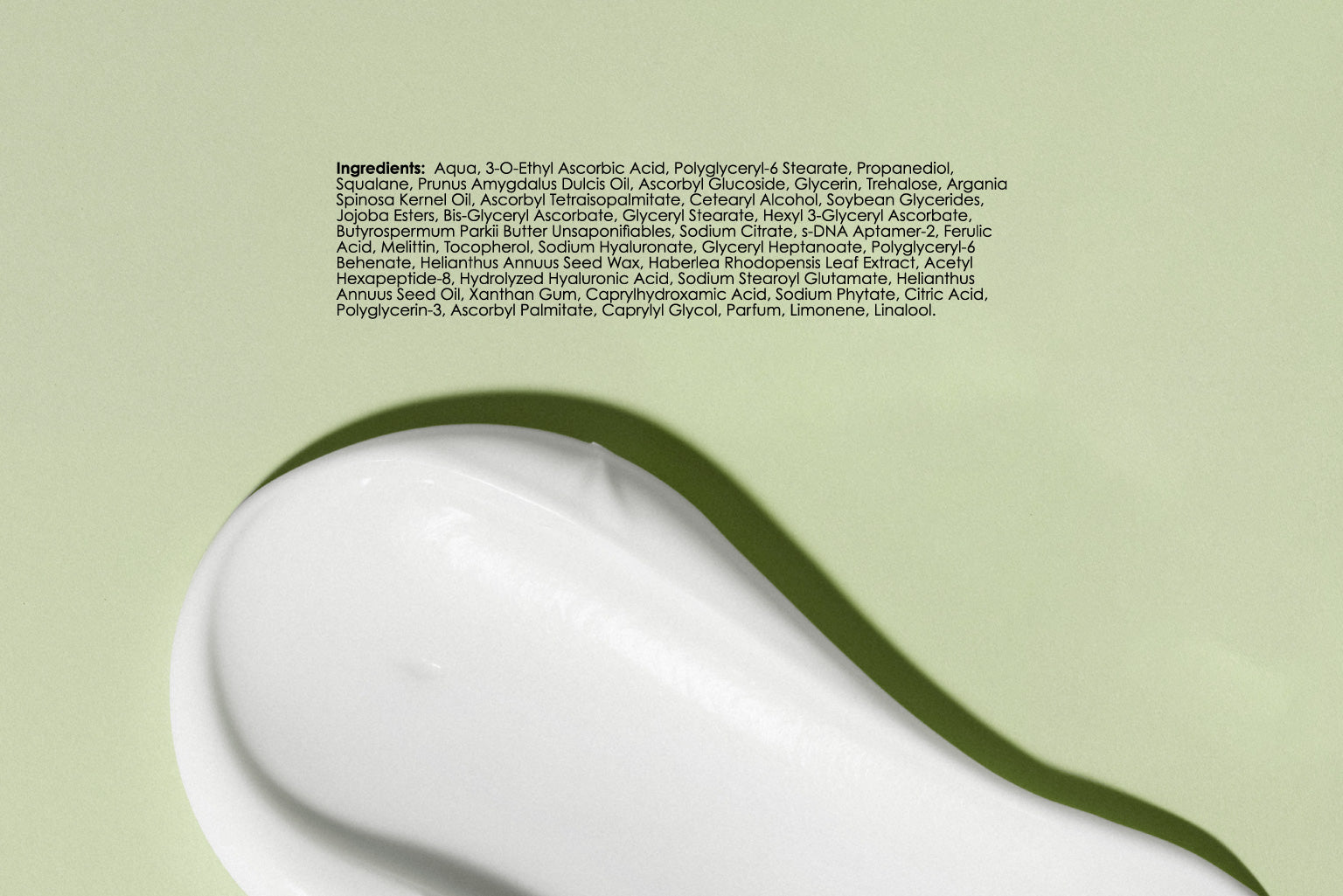
Imagine a Sunday morning. No alarm clock, just soft light filtering through the curtains. You’re standing at your dressing table, a new serum in your hand, full of hope. Its elegant packaging promises radiance, firmness and a youthful glow. But then your gaze falls on the tiny, dense print on the back – the daunting INCI list. A string of Latin and chemical names, seemingly impenetrable, overwhelming. You know that feeling, don’t you? That moment when you wonder whether the promises on the front of the packaging hold true, or whether you’re holding yet another product that’s just putting on a show... At HDRÈY, we understand that true beauty isn’t just about outward radiance, but above all about conscious choices that translate into the health and vitality of your skin.
Why does the composition of a cosmetic matter?
Why should we even bother trying to decipher these complicated names? The answer lies deep within our skin – the most complex and largest organ in our body. The skin is constantly at work: during the day it defends itself against external factors, whilst at night it undergoes an intensive phase of cellular regeneration and repair. It is precisely then, whilst we rest at night, that the so-called skin circadian cycle takes place, during which cells renew themselves intensively and the skin prepares for the next day. The wrong ingredients can disrupt this natural process, leading to irritation, dryness and even accelerated ageing.
That is why mindful skincare is more than just a ritual – it is an investment in the health and future of our skin. In a world where shelves are groaning under the weight of hundreds of products, it is crucial to understand what we are actually applying to our skin. Whilst marketing often highlights a single, trendy active ingredient, the true power of a cosmetic lies in a holistic view of the entire formula – from the base to the preservatives. It is this that determines its actual effectiveness and safety.
The truth is, we don’t need dozens of products. HDRÈY’s philosophy is based on minimalism and quality over quantity. It’s better to invest in a few truly well-formulated, safe cosmetics than to accumulate a host of mediocre products that may ultimately do more harm than good. Knowing how to read the ingredients list will allow you to make choices that align with your values and the needs of your skin, resulting in truly luxurious skincare. Understanding INCI in cosmetics is your ticket to the world of genuinely effective and natural products.
INCI code revealed: Deciphering the language of ingredients
INCI (International Nomenclature of Cosmetic Ingredients) names are a standardised system for naming cosmetic ingredients, recognised worldwide. Thanks to this, regardless of the country where you buy a product, you can always identify the same substances. Key rule: ingredients are listed in descending order of concentration. This means that the substances at the top of the list are present in the greatest quantity, and those at the bottom in the smallest (with the exception of ingredients below 1%, which may be listed in any order).
What to look for and what to avoid?
- Water (Aqua): Often listed first, which is natural as it forms the base of many products.
- Active ingredients: Look for them as high up the list as possible. Examples include vitamins (Ascorbic Acid – Vit. C, Tocopherol – Vit. E), hyaluronic acid (Hyaluronic Acid, Sodium Hyaluronate), retinoids (Retinol, Retinal), peptides (Palmitoyl Tripeptide-X), plant extracts (e.g. Aloe Barbadensis Leaf Juice – aloe vera juice, Camellia Sinensis Leaf Extract – green tea extract).
- Plant oils and butters: (e.g. Butyrospermum Parkii Butter – shea butter, Argania Spinosa Kernel Oil – argan oil, Simmondsia Chinensis Seed Oil – jojoba oil). These are valuable emollients and sources of vitamins.
- Preservatives: Essential for product safety. Avoid formaldehyde and its donors (e.g. Quaternium-15, DMDM Hydantoin). Phenoxyethanol, Sodium Benzoate and Potassium Sorbate are commonly used and considered safe at permitted concentrations.
- Fragrances (Fragrance, Parfum): These can cause irritation. If you have sensitive skin, look for fragrance-free products or those with naturally derived fragrances (e.g. from essential oils, although these can also cause allergies).
- Colourants (labelled CI + a five-digit number): These do not usually affect efficacy, but may be a potential allergen.
- Silicones (ending in -cone, -xane, -silanol): (e.g. Dimethicone, Cyclopentasiloxane). They form a protective film on the skin and smooth it, but may clog pores in some people, especially in high concentrations. They are usually absent from natural cosmetics.
- Harmful substances to avoid (in high concentrations): SLES/SLS (strong detergents), parabens (though not all are considered harmful, some people prefer to avoid them), mineral oils (Paraffinum Liquidum, Mineral Oil) – they create an occlusive barrier that may be too heavy for certain skin types.
Step-by-step routine – key ingredients for your conscious skincare
Creating the perfect routine is an art of customisation, and understanding ingredients is fundamental. Here’s what to look for on labels at each stage. This is the foundation of truly luxurious skincare.
Step 1: Cleansing – Gentleness is key
- What to do: Start and end your day by removing impurities, make-up and excess sebum. This is key to ensuring that the active ingredients from the subsequent steps can penetrate deeper.
- How to choose a product: Look for gentle cleansers that do not compromise the skin’s hydrolipid barrier.
- Ingredients to look for: Glucosides (Coco-Glucoside, Decyl Glucoside), betaines (Cocamidopropyl Betaine), amino acid surfactants (Sodium Cocoyl Isethionate, Disodium Cocoyl Glutamate). Aloe (Aloe Barbadensis Leaf Juice) or glycerine (Glycerin) will help maintain hydration. Avoid harsh detergents (SLS, SLES). These principles are particularly important for natural facial cleansers. Here you will find high-quality facial cleansers that meet these criteria.
Step 2: Toning – Restoring balance
- What to do: After cleansing, the skin’s pH may be altered. A toner restores its natural balance and prepares it to absorb further products.
- How to choose a product: Choose alcohol-free toners that also moisturise or soothe.
- Ingredients to look for: Hydrosols (Rosa Damascena Flower Water – rose hydrosol, Lavandula Angustifolia Flower Water – lavender hydrosol), hyaluronic acid (Sodium Hyaluronate), niacinamide (Niacinamide), panthenol (Panthenol).
Step 3: Serum/Concentrate – Targeted action
- What to do: This is the heart of your skincare routine. Serums contain high concentrations of active ingredients that target specific skin concerns (dark spots, wrinkles, dryness).
- How to choose a product: Match the serum to your individual needs. Opt for antioxidants in the morning and regenerating ingredients in the evening.
- Ingredients to look for:
- Morning (antioxidation and protection): Vitamin C (Ascorbic Acid, Tetrahexyldecyl Ascorbate), Vitamin E (Tocopherol), ferulic acid (Ferulic Acid), coenzyme Q10 (Ubiquinone), green tea extracts (Camellia Sinensis Leaf Extract).
- In the evening (regeneration and renewal): Retinoids (Retinol, Retinaldehyde, Bakuchiol as an alternative), peptides (Palmitoyl Tripeptide-1, Argireline), hyaluronic acid (Hyaluronic Acid), ceramides (Ceramide NP, Ceramide AP), niacinamide (Niacinamide). Look for these ingredients in your facial care products.
Step 4: Eye cream – Gentle care
- What to do: The skin around the eyes is the thinnest and most delicate; it requires a special, lightweight formula that won’t weigh it down.
- How to choose a product: Look for creams designed specifically for this area, which moisturise and support elasticity.
- Ingredients to look for: Hyaluronic acid, peptides, vitamin C, caffeine for puffiness, cucumber extracts (Cucumis Sativus Fruit Extract). Avoid heavy, occlusive ingredients that can cause lymphatic congestion.
Step 5: Moisturiser – Protective barrier
- What to do: The cream locks moisture into the skin, creating a protective barrier and delivering nutrients.
- How to choose a product: A light gel, emulsion or rich cream – match the texture to your skin’s needs and the season.
- Ingredients to look for:
- Humectants (water-binding): Glycerine (Glycerin), hyaluronic acid (Sodium Hyaluronate), urea (Urea).
- Emollients (moisturising, film-forming): Plant oils (Argania Spinosa Kernel Oil, Simmondsia Chinensis Seed Oil), shea butter (Butyrospermum Parkii Butter), squalane (Squalane).
- Occlusives (preventing water loss): Plant waxes, lanolin, petroleum jelly (though the latter are less common in natural cosmetics).
- Barrier-supporting ingredients: Ceramides (Ceramide NP), cholesterol (Cholesterol), fatty acids (Linoleic Acid).
Step 6: SPF protection (morning) – The undisputed hero
- What to do: The most important step in preventing skin ageing and protecting against sun damage.
- How to choose a product: Minimum SPF 30, preferably 50, applied daily, regardless of the weather.
- Ingredients to look for:
- Mineral filters: Zinc Oxide, Titanium Dioxide (ideal for sensitive skin).
- Chemical filters: Avobenzone, Octinoxate, Tinosorb S/M (modern chemical filters are photostable and safe).
How to tailor your routine to your skin type? Ingredients that make a difference
Remember that every skin type is unique and requires a personalised approach. Understanding how to read the ingredients list will allow you to precisely select products that really work.
Dry/Dehydrated Skin:
- Characteristics: Tightness, roughness, tendency to flake, often dull. Lacking in lipids and water.
- Ingredients to look for: Focus on intensive hydration and rebuilding the lipid barrier.
- Humectants: High concentrations of hyaluronic acid (various molecular sizes), glycerine, urea.
- Emollients/Occlusives: Rich butters (shea, cocoa), plant oils (argan, jojoba, avocado), squalane, ceramides, cholesterol, fatty acids.
- Avoid: Harsh cleansers, alcohol in toners, strong acids without adequate moisturisation.
- Key: Layering moisturising and emollient products to provide both water and lipids. Look for thick, nourishing creams and oils.
Combination/Oily Skin:
- Characteristics: Shine in the T-zone, enlarged pores, prone to blemishes, but cheeks may be normal or dry. Excess sebum production.
- Ingredients to look for: Aim for sebum regulation, soothing inflammation, pore minimisation and light hydration.
- Sebum-regulating: Niacinamide, Zinc PCA, green tea extracts.
- Exfoliants (gentle): BHA acids (Salicylic Acid) – penetrate the pores perfectly; PHA acids (Gluconolactone, Lactobionic Acid) – gentle and moisturising.
- Light moisturisation: Hyaluronic acid, aloe vera gels, light emulsions with non-comedogenic oils (e.g. jojoba, raspberry seed).
- Avoid: Heavy, comedogenic oils (coconut, cocoa butter in high concentrations), too many silicones, and heavily mattifying products, which can dry out the skin and cause a yo-yo effect.
- Key: Thorough but gentle cleansing, targeted serums and light, non-comedogenic moisturisers.
Mature Skin:
- Characteristics: Loss of firmness and elasticity, wrinkles, dryness, uneven skin tone, reduced ability to regenerate.
- Ingredients to look for: Focus on collagen stimulation, intensive regeneration, antioxidants and deep hydration.
- Stimulating and anti-ageing: Retinoids (Retinol, Retinal), peptides (Palmitoyl Oligopeptide, Copper Tripeptide-1), vitamin C (various forms), hyaluronic acid (various molecular weights).
- Antioxidants: Vitamin E, ferulic acid, coenzyme Q10, resveratrol, plant extracts (e.g. from Centella Asiatica).
- Barrier-restoring: Ceramides, cholesterol, squalane, rich plant oils (from prickly pear, rosehip).
- Avoid: Overly aggressive mechanical exfoliants, products that are highly drying, and the overuse of strong acids without adequate moisturising support.
- Key: Comprehensive skincare with multiple active ingredients, regular moisturising and strict SPF protection. Choose luxury cosmetics that offer advanced formulas and high-quality ingredients.
Skincare as a ritual – boosting confidence and reducing stress
Skincare is much more than just applying a series of products. It is a conscious act of self-care, a ritual that can become a true ‘moment for yourself’. In a world that’s racing at breakneck speed, this daily moment of self-focus is priceless. Let it not be just another chore, but rather a well-deserved break, a meditation for the senses. Scents, textures, a gentle massage – all of this affects our nervous system, reducing oxidative stress and tension.
When you know your natural skincare products have been chosen with care, when you understand what’s in them and why they’re good for your skin, you gain more than just a healthy complexion. You gain self-confidence. A sense of control over what your body absorbs. This trust in yourself and in the products you choose translates into inner peace and outer radiance. Skincare becomes a form of self-care, a celebration of your own body and mind, and beautiful skin is a natural consequence of this holistic approach.
Summary
Deciphering the INCI code may seem complicated at first, but it is a skill that will transform your skincare routine. You stop being a passive consumer and become a knowledgeable expert on your own skin. Remember that beauty is the wisdom of choice, and every consciously chosen ingredient is a step towards healthier, radiant skin. Start your journey into conscious skincare today and discover how much you can gain by reading between the lines of labels. Your skin will thank you for it.