Retinol vs retinal – which is more effective?
Retinol, until recently referred to as the ‘gold standard in cosmetology’, now has a successor. Retinal, as it is known, is valued for its exceptionally effective anti-ageing properties, its ability to regulate sebum production, and its role in combating acne and hyperpigmentation. Retinoids work in the deeper layers of the skin, stimulating cell renewal and collagen production.
Both retinol and retinal belong to the retinoid family, i.e. derivatives of vitamin A – a substance that plays a key role in skincare. To be effective, both must be converted into the same active form – retinoic acid. So what sets them apart? We explain it step by step.

What are retinoids and retinoic acid, and how do they work?
Retinoids, derivatives of vitamin A
Retinoids are a group of chemical compounds derived from vitamin A. Vitamin A plays a key role in skin health, influencing its regeneration, elasticity and appearance. Vitamin A derivatives, such as retinol and retinal, are widely used in cosmetics and dermatological medicines to improve skin condition, reduce wrinkles, lighten hyperpigmentation and regulate sebaceous glands. Thanks to their properties, retinoids have become an indispensable part of daily skincare.
The difference between retinol and retinal
Retinol and retinal are two popular retinoids used in cosmetics which, although they are derivatives of vitamin A, differ in terms of structure, action and efficacy. Retinol and retinal must be converted into retinoic acid in order to act effectively on the skin.
A shorter pathway
The process of converting both vitamin A derivatives into their active forms follows this sequence: retinol is converted into retinal, and retinal is then converted into retinoic acid. In other words, retinal (known as retinaldehyde in chemistry) is a direct precursor of retinoic acid, whereas retinol requires an additional conversion step.
Faster results
Retinol acts more slowly and gradually, which is why the first effects of its use are only visible after a few months. Retinal affects the appearance of the skin much more effectively; the results of the treatment (a firmer and smoother complexion) become noticeable much sooner.

Retinol – a classic in skincare
Retinol, an alcohol form of vitamin A, is now a classic ingredient used in skincare. When applied to the skin, retinol converts into retinal and then into retinoic acid, which stimulates collagen production, improves skin texture and reduces the signs of ageing. Although retinol works more slowly than retinal, it is widely available in cosmetics and is often chosen by those new to retinoids. It is also a good choice for first-time users of retinoids, as its gradual action minimises the risk of irritation.
Retinal – the newer generation of retinoids
Retinal, also known as retinaldehyde, represents the newer generation of retinoids, which acts faster and is gentler on the skin. As a direct precursor to retinoic acid, retinal converts into the active form of vitamin A in a single step, which accelerates the effects of its use. Retinal is particularly recommended for sensitive skin, as it is highly effective yet carries a lower risk of irritation compared to retinol. Thanks to its antibacterial properties, retinal is also effective in combating acne, making it a versatile ingredient in skincare.
The antibacterial action of retinal
Compared to retinol, retinal has an additional advantage – it exhibits antibacterial action, making it a better choice, for example, for those struggling with acne. Additionally, retinal effectively lightens hyperpigmentation. This is why it proves to be a versatile ingredient in skincare.
Why choose retinal?
A comparison of the properties of both substances leads to clear conclusions. Retinal offers a range of benefits that make it a better choice than retinol. The following are particularly noteworthy:
• faster action – retinal requires only a single conversion to retinoic acid, meaning the effects appear sooner,
• lower risk of irritation – despite its potency, retinal is better tolerated by the skin than retinol,
• antibacterial action – retinal helps combat acne-causing bacteria, making it an excellent choice for problem skin,
• stronger anti-ageing properties – retinal stimulates collagen production more effectively and reduces wrinkles.
The best cosmetics containing retinal
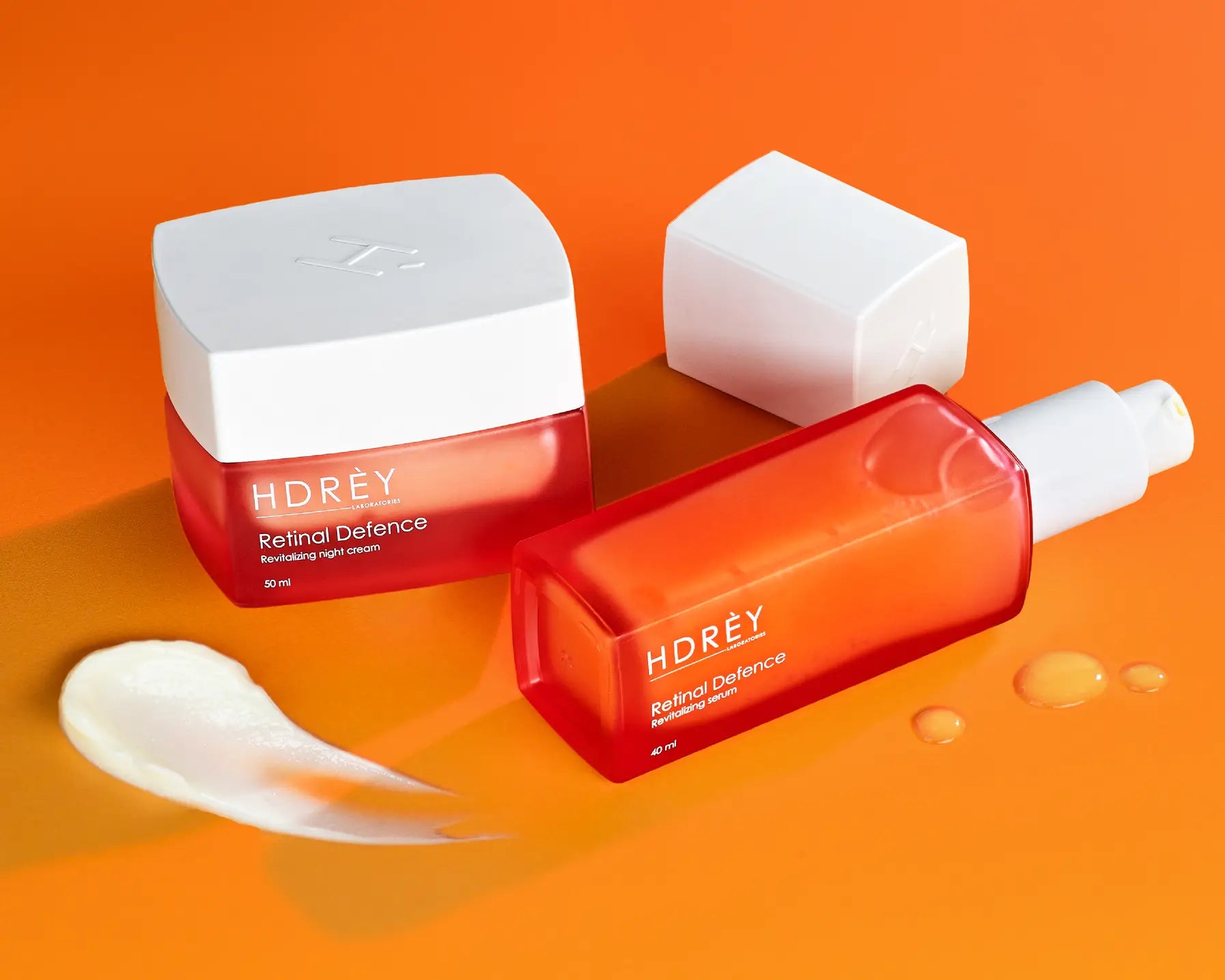
More and more cosmetics containing retinal are appearing on the market, but not all of them draw on the latest scientific and medical advances. This makes it all the more worthwhile to discover the HDRÈY Retinal Defence range, which provides the skin with a comprehensive, intensive rejuvenating treatment. It includes:
• retinal ampoules – concentrated, highly revitalising ampoules with the Renaissance HPS3® complex,
• retinal serum – effectively combats ageing, firms and moisturises the skin,
• retinal cream – has an anti-wrinkle effect, visibly improves skin elasticity and tone, leaving the complexion firmer, nourished and radiant,
• retinal mask – a highly revitalising, two-layer sheet mask, rich in the Renaissance HPS3® complex and highly concentrated active ingredients.
Retinal Defence cosmetics are particularly rich in liposomal retinal, vitamin C and niacinamide. As a result, they effectively combat the signs of ageing and loss of elasticity, whilst evening out skin tone.
When to use retinol and when to use retinal?
Retinol and retinal are two different forms of retinoids, each with specific applications in skincare. Retinol works more slowly and is often chosen for sensitive skin, which may be more prone to irritation. Furthermore, retinol effectively regulates sebum production. Retinal, on the other hand, thanks to its faster conversion to retinoic acid, delivers results more quickly and is the ideal choice for those with signs of ageing, such as wrinkles or loss of firmness. The choice between retinol and retinal therefore depends on the individual needs of the skin and the desired results.

Retinol for beginners
Retinol is an excellent choice for those who are just starting to use retinoids in their skincare routine. Because it works more slowly, retinol allows the skin to gradually get used to the new active ingredient, minimising the risk of irritation.
In all cases, you should start using retinoids at low concentrations. Products containing retinol can be applied to the face twice a week initially, and then the frequency of application can be gradually increased. This method allows the skin to adapt to retinol, which is key to achieving the best results without unwanted side effects.
Retinol and retinal are best used in the evening, as retinoids can increase the skin’s sensitivity to the sun. In the morning, it is essential to apply a cream with high SPF 50 sun protection to shield the skin from the harmful effects of UV rays.
Can retinol and retinal be used all the time?
Retinol and retinal can be used over a long period, but it is important to follow the instructions for use. Due to the risk of irritation, it is advisable to monitor your skin’s reaction and adjust the frequency of application. Regular use of retinoids can bring long-term benefits, such as reducing wrinkles, improving skin elasticity, lightening dark spots and stimulating collagen production. To achieve these results, however, the chosen products must be used in accordance with the manufacturer’s instructions.

Take advantage of scientific advances!
Compared to retinol, retinal performs better in terms of effectiveness and speed of action, whilst also being gentler on the skin. Thanks to its faster conversion to retinoic acid, lower tendency to cause irritation and antibacterial properties, retinal has become an excellent choice for those struggling with both wrinkles and acne. If you’re wondering what to choose – retinol or retinal – try HDREY’s Retinal Defence range. Especially if you want to see the effects of your anti-ageing treatment on your face sooner.