The skin on your face is an incredibly sensitive seismograph that registers every instance of fatigue, every sleepless night, moments of intense stress, and every hour spent in the sun without adequate protection. When you remove your makeup and shed the armor of foundation and concealer, your complexion tells an authentic story of your life. Darker spots on the forehead, freckles that have long ceased to look charming, or stubborn traces of past imperfections are challenges we face daily. In the thicket of cosmetic promises, it's easy to get lost. We look for quick solutions, buying one product after another, which, instead of helping, often leads to the disruption of the natural protective barrier. The problem of uneven skin tone, however, requires patience, strategic thinking, and a deep understanding of your own physiology. Before deciding on a specific product, it is worth taking a closer look at the nature of the problem itself. Understanding how pigment is formed in our skin and why its overproduction sometimes occurs is the first step towards creating a highly effective and fully conscious skincare routine that will bring real relief and spectacular results.
Shadows and spots on the map of the face - how does uneven skin tone manifest and what do we confuse it with?
Pigmentation disorders are a constant play of light and shadow on the surface of our skin, resulting from the fascinating but often problematic process of melanogenesis. At the base of the epidermis are melanocytes – cells that act as microscopic pigment factories. Under ideal conditions, they produce melanin in even amounts, giving us a healthy, radiant appearance. However, in the face of inflammatory factors, UV radiation, or hormonal fluctuations, melanocytes become overactive. This leads to an uncontrolled release of melanin, which is transported via special projections (dendrites) to the higher layers of the epidermis, creating visible, unsightly spots. It is extremely important to properly diagnose the type of discoloration. We most often encounter melasma, which is characterized by symmetrical spots on the cheeks or above the upper lip and has a hormonal basis. Another common phenomenon is lentigines, which are a direct result of the accumulation of sun damage over the years, as well as post-inflammatory hyperpigmentation (PIH), which is an unpleasant reminder of acne lesions.
Crucially, we often confuse the actual problem of melanin overproduction with severe dehydration and damage to the hydrolipid barrier. When the stratum corneum is dry and devoid of intercellular cement in the form of ceramides, light does not reflect evenly from it. The skin becomes dull, sallow, grayish, and natural light refractions create the illusion of deep shadows and uneven skin tone. Before you implement an aggressive depigmentation treatment, you need to ask yourself if your skin doesn't primarily need deep soothing. If you feel permanent tightness, burning during the application of gentle cosmetics, and your face quickly reddens, it's a sign that the protective barrier is asking for help. Using strong acids at such a moment can only exacerbate inflammation and paradoxically cause new hyperpigmentation. When choosing safe cosmetics for hyperpigmentation, you must be sure that they combine brightening action with the necessary reconstruction of the microbiome and lipid barrier. A holistic approach to diagnosis is the foundation upon which every successful skincare transformation is based.
More than pigment - how do stress, diet, and lack of sleep affect skin tone?
Your skin does not function in a vacuum; it is an absolute reflection of the processes occurring within your body. The phenomenon of uneven skin tone is a problem that cannot be eliminated solely by applying cosmetics to the surface of the epidermis. It requires a much broader perspective. Let's start with the most powerful enemy of radiant skin – chronic stress. When your body is under constant tension, the level of cortisol, known as the stress hormone, dramatically increases. This leads to systemic inflammation, which is one of the most common triggers for melanocytes to increase pigment production. Additionally, stress slows down natural healing processes, making any micro-damage and inflammation transform into stubborn, dark spots that are extremely difficult to remove.
Another equally important pillar affecting skin tone is our daily diet and the phenomenon of protein glycation. Consuming excessive amounts of simple carbohydrates and processed foods leads to the formation of advanced glycation end products (AGEs). Sugar molecules attach to collagen and elastin fibers, causing them to stiffen and change color to yellowish. As a result, the skin loses its transparency and healthy, youthful glow, and existing discolorations become visually even more distinct from the background and harder to conceal. In turn, antioxidant deficiencies in the diet deprive the body of its natural defense against oxidative stress, caused by smog and UV radiation.
We also cannot forget the fundamental role of sleep. Night is when your skin goes into intensive regeneration and cell renewal mode. It is during deep sleep phases that DNA damage is repaired and toxins are intensely removed. Chronic lack of sleep leads to impaired microcirculation – blood vessels dilate, dark circles appear under the eyes, and the face takes on a characteristic, tired, and grayish shade. Every cell in your body needs time to regenerate, which is why proper sleep hygiene is the best, natural catalyst for the active ingredients in your skincare.
Targeted care - what to use in the morning and what in the evening?
Let's get to the heart of the matter – how to wisely combine various cosmetic forms to achieve maximum benefits without risking overloading the skin. Understanding the physical differences between a serum and a cream allows for their strategic placement in the daily skincare cycle. A water-based or gel serum is a true masterpiece of formulation – a product with an extremely small molecular weight, designed to act in the deeper layers of the epidermis and deliver a powerful dose of active substances directly to the source of the problem. A cream, on the other hand, is a complex emulsion whose task is not only to work with pigment but above all to create an occlusive layer that prevents transepidermal water loss (TEWL). A properly formulated cream for discoloration becomes a protective shield and a slow-release system for ingredients all in one.
The morning routine is the moment when we build an armor resistant to the challenges of the coming day. Your main goal in the morning is to neutralize free radicals and block environmental factors that could stimulate melanocytes. An ideal choice would be a professional, antioxidant face serum, based on stable forms of vitamin C, such as ascorbyl tetraisopalmitate or ethyl ascorbic acid. Vitamin C not only scavenges free radicals but also gently inhibits the action of tyrosinase – a key enzyme in melanin production. Applying a concentrated serum allows for immediate absorption, leaving a matte finish ready for makeup. An absolute and non-negotiable step in morning skincare, concluding the routine, is the application of SPF 50 photoprotection. Even the most perfect brightening substances will prove useless if you forego protection against UVA and UVB radiation.
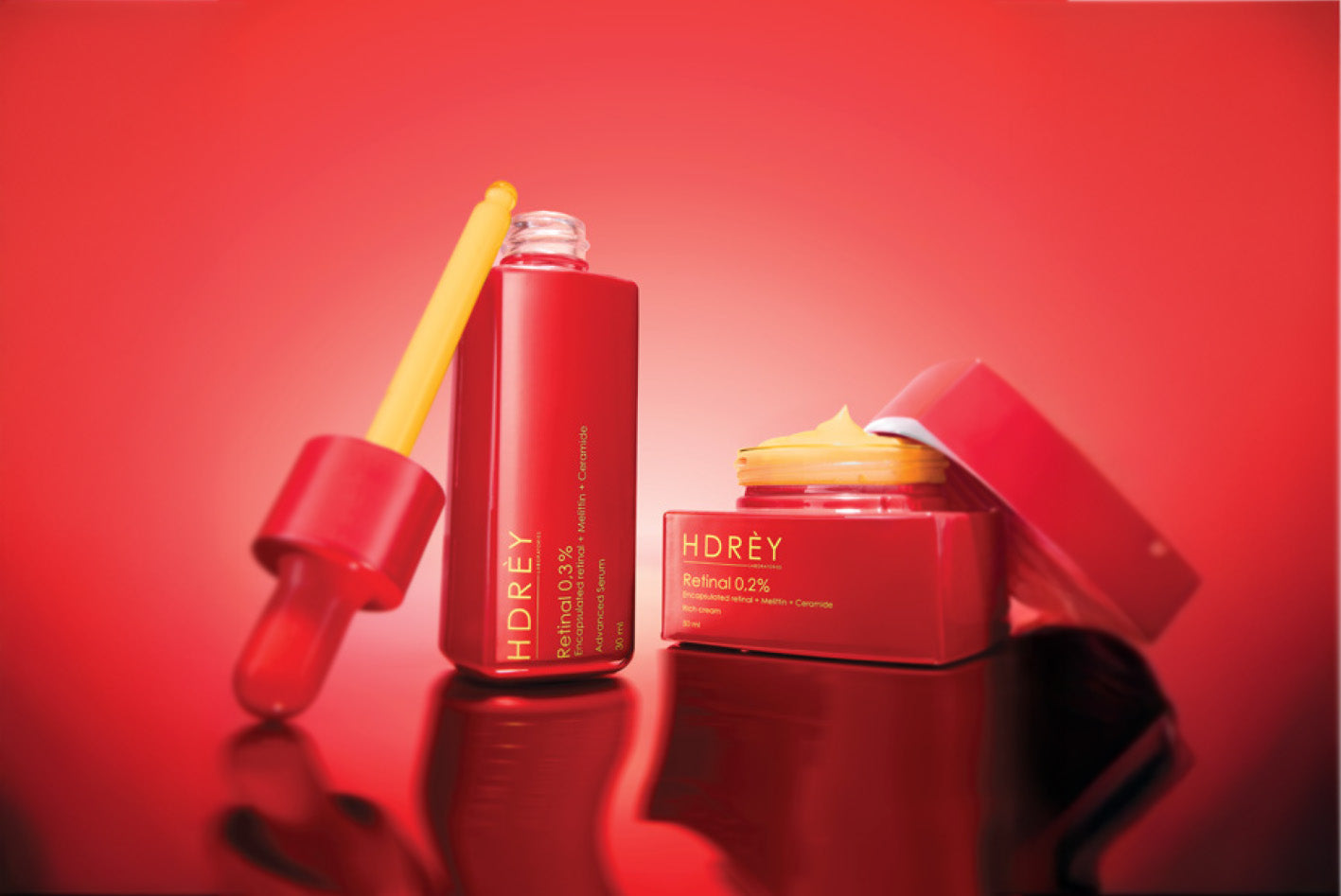
Evening, in turn, is a space for deep repair and stimulation of epidermal reconstruction. This is an excellent time to introduce advanced creams for discoloration that will patiently work throughout the night. Look for formulas that combine tyrosinase inhibitors (such as tranexamic acid, kojic acid, azeloglycine, or alpha-arbutin) with a powerful dose of regenerating ingredients (ceramides, squalane, cholesterol). For deep discoloration, retinal – a derivative of vitamin A that surpasses traditional retinol in stability and speed of action – will also work perfectly in the evening. Retinal accelerates the cell renewal cycle, literally shedding layers of the epidermis loaded with excess pigment, while the cream envelops the face, minimizing the risk of irritation and rebuilding the hydrolipid barrier. By combining a concentrated antioxidant serum in the morning with a rich, reparative depigmenting cream in the evening, you create a synergy that leaves hyperpigmentation no chance of survival.