You comb your hair in the morning, and instead of a silky glide, you feel resistance. Your hair tangles, crumbles with every touch of the brush, and in the mirror, you see a dull, lifeless sheet. This is the moment when frustration meets exhaustion. However, you don't have to settle for compromises or drastic cuts. The solution is not magic, but an understanding of trichology and the mechanisms that govern the condition of the hair shaft. When the physiological lipid layer disappears, we are left with a naked, defenseless structure that is extremely susceptible to mechanical and environmental damage. It's time to rebuild this foundation by implementing conscious, science-backed actions every day.
Hair shaft structure - why do strands become rough and lose their ability to retain water?
To effectively repair micro-damage, we need to go down to the cellular level. Hair in its architecture consists of a medulla, cortex, and cuticle. The latter is nothing more than overlapping scales, made of hard keratin, which in healthy hair are tightly connected by a lipid binder. When you regularly dry your hair with hot air, lighten it at the hairdresser, or simply expose it to strong sunlight without adequate protective shield, you destroy this delicate cement-like bond. As a result, the scales lift away from the cortex, and the internal structure begins to rapidly lose vital moisture.
It is then, in front of the mirror, that we diagnose dry hair, which without quick intervention evolves into deeply damaged hair with a frayed, rough texture. The open cuticle no longer protects against water loss, and the inner cortex of the hair gradually degrades. Understanding this process is an absolute foundation and the first step to success. It is not enough to douse your hair with heavy silicones, which merely mask the problem under a seemingly smooth coating, giving the illusion of health. What is needed is a deep, structural hair regeneration that will rebuild the binder and tightly close the cuticles, restoring physiological balance and resilience along the entire length.
The chemistry of beauty - what active ingredients actually repair the hair structure?
Modern cosmetology and trichology offer us tools with powerful reparative properties. Remember, however, that not all substances work the same way, and the key is to choose the right ingredients for your current porosity. Truly advanced hair care cosmetics are based on the foundation of PEH balance, which is the appropriate balance between proteins, emollients, and humectants.
Humectants, including high-molecular-weight hyaluronic acid, soothing trehalose, aloe vera juice, or panthenol, act as molecular sponges. Their task is to bind water molecules deep inside the hair cortex, immediately raising the hydration level from within. However, water alone is definitely not enough. If it is not properly trapped, it will quickly evaporate into the environment. This is where emollients come into play, i.e., nourishing plant oils (such as argan, jojoba, macadamia), rich shea butter, and sealing ceramides. They create a highly occlusive, protective film on the cuticle surface, perfectly mimicking the natural lipid binder. Proteins, in turn, such as hydrolyzed keratin, vegan silk, or oat proteins, act like intelligent, microscopic building blocks, precisely filling gaps in the ruined architecture of the strands. Only the synergy of these three groups guarantees long-term success and a beautiful appearance.
Advanced repair ritual - how to plan daily washing and conditioning?
Your home bathroom should transform into a professional trichological laboratory where every step is precisely planned. The first and extremely important stage is scalp cleansing, which should never be aggressive. Always choose a shampoo according to your scalp's needs, but protect sensitive hair lengths from strong detergents using the proven OMO method (conditioner - wash - conditioner). On damp hair, even before spreading shampoo at the roots, apply a light protective base. A moisturizing hair conditioner will work perfectly here, creating a buffer that protects brittle and split ends from drying out during foam rinsing.
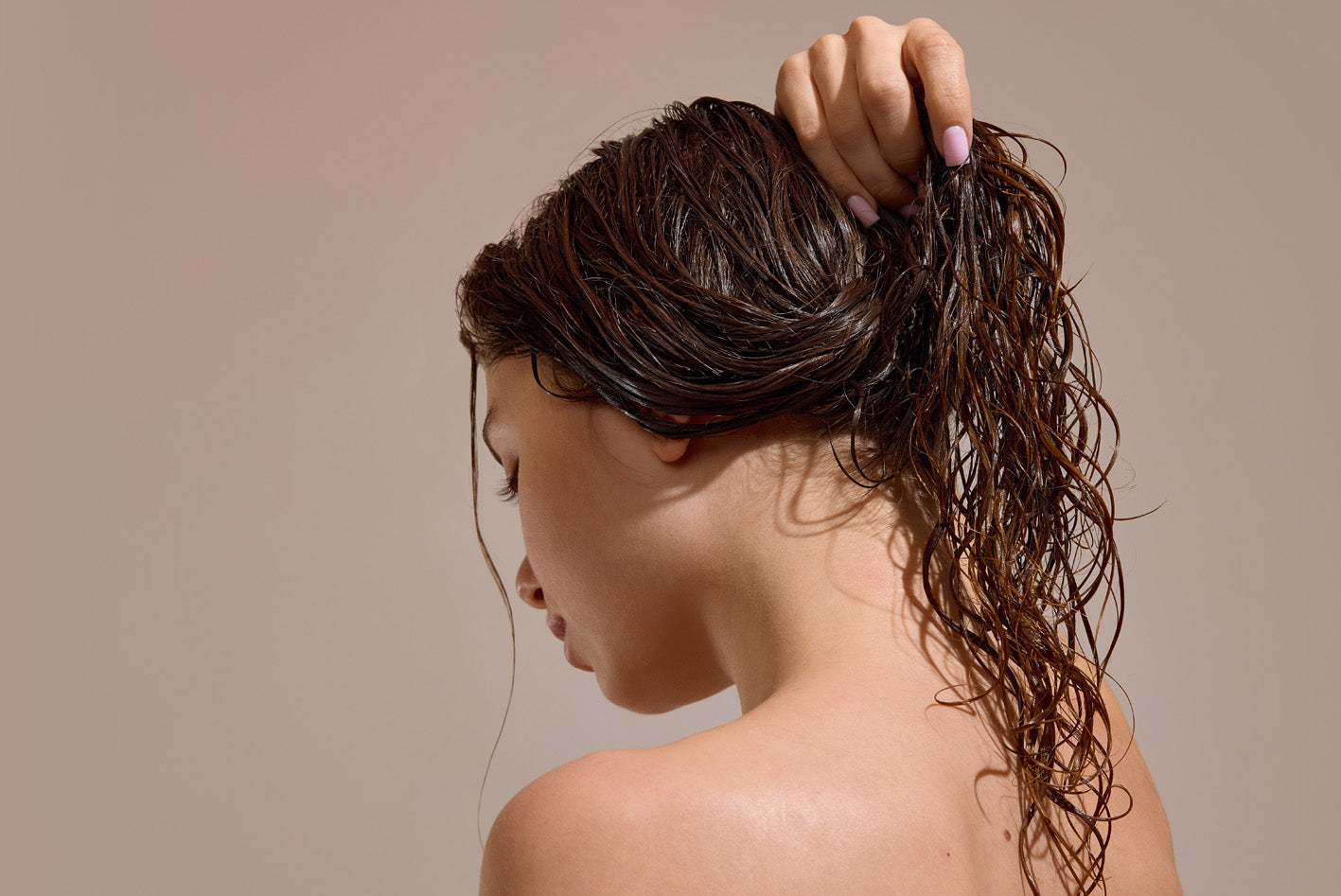
After thoroughly rinsing the shampoo from the scalp (the flowing water with a delicate foam is sufficient to refresh the hair along its length), it's time for the crucial moment of intense rebuilding. Step two in this advanced routine is thick, high-quality hair masks, especially masks for damaged hair, whose careful application should become your weekly, anticipated ritual of calming down. Massage the rich consistency in small sections, focusing on areas from mid-length to the very driest ends. Use a wide-toothed comb with gently rounded teeth to perfectly and evenly distribute the product on every single hair. The mask's holding time depends on the manufacturer's recommendations, but applying a warm compress in the form of a cotton turban significantly enhances the effect of the active ingredients. Heat gently opens the hair cuticles, facilitating deep penetration of nourishing substances. Finish the entire process by rinsing your hair with cool water, which physiologically closes the hair cuticle, permanently retaining beneficial substances deep within its structure.
Sabotage in the bathroom - what habits must you give up immediately?
Even the most exceptional and effective preparations will fail when faced with brutal physics if you make fundamental mechanical and thermal mistakes. Many conscious women unintentionally damage already weakened hair by falling into the traps of repetitive, hasty routines after showering.
- Aggressive rubbing with a harsh towel – wet hair swells under the influence of water, loses its natural elasticity, and becomes extremely susceptible to breakage. Instead of brutally rubbing wet strands with rough terry cloth, always very gently blot excess water by pressing a soft, cotton T-shirt or a specialized smooth microfiber turban.
- Sleeping with wet, unbound hair – this is the simplest recipe for a trichological catastrophe. Unconscious rubbing of damp, swollen strands against a cotton pillowcase for eight hours leads to irreversible micro-damage, breakage, and massive tangling. Always make sure you dry your hair with a cool or lukewarm hairdryer before going to bed, and then braid it loosely or gather it into a gentle bun on top of your head.
Remember also that daily brushing should be a slow and careful process, not a race against time. Always start detangling directly from the ends, very slowly and in stages working your way up to the roots. Mechanically yanking tangles by force from the scalp is a direct path to pulling out weakened hair follicles and irrevocably breaking the hair shaft along its length.
Summary - how to maintain a smooth surface for many weeks?
The complex process of consistently rebuilding weakened, dry hair strands requires time, unwavering consistency, and a deep understanding of the signals our body sends us. Let's not kid ourselves – it's impossible to magically fix months of neglect during a single, even the longest, wash. However, implementing a conscious, optimized routine brings spectacular results much faster than you initially think. Treat your daily, evening hair care as a long-term investment in yourself. This is your private time, during which you provide your tired hair with what is absolutely essential for its proper, biological functioning and regeneration. When you skillfully combine gentle cleansing, deep hydration with humectants, targeted nourishment with proteins, and absolute protection with emollients, you will quickly notice a complete transformation. Your strands will regain their desired elasticity, and unwanted dullness will give way to a multidimensional, healthy shine. Be patient in your actions, carefully observe your hairstyle's reactions to individual ingredient configurations, and with full awareness enjoy the fascinating process of regaining natural beauty.