You touch your strands, and they glide through your fingers like silk. On the one hand, they are incredibly soft and pleasant to the touch, but on the other, they can be frustrating when they fall flat on your shoulders just tens of minutes after styling. Understanding the nature of your hair is the absolute foundation upon which we build everything else. They require not only appropriate products but, above all, a precise strategy. Instead of fighting their delicate structure, we must learn to manage it wisely. Conscious hair care today is not just about applying products; it's a deep understanding of the chemistry and physics that occur on your scalp every day. Our goal is to create a lasting framework for your hairstyle, without using cementing, sticky substances. We choose wisdom, lightness, and advanced technologies that work with your body's natural dynamics.
Anatomy of delicacy - how does the structure of fine hair manifest and what do we most often confuse it with?
To effectively manage your hairstyle, we need to look deep into its structure. Fine hair differs from thicker strands at a microscopic level. Their diameter is much smaller, which results from the specific structure of the medulla. Often, a small-diameter shaft has no medulla at all. Instead of a full, three-layered structure, we are dealing with a cortical layer and a cuticle. This is why they are so incredibly susceptible to mechanical damage and flaccid. This phenomenon means that they lack natural stiffness and resistance to the force of gravity. A very common mistake in trichology clinics and in front of the home mirror is confusing the concept of hair thickness with its density. You can have hundreds of thousands of hair follicles on your head and a very dense mane, but if a single shaft is fine, the entire hairstyle will appear to cling to the scalp. Density is the number of hair follicles per square centimeter of skin, while thickness refers only to the diameter of a single fiber. Understanding this difference is the first step to success. Another issue is sebum behavior. Sebaceous glands work at their own pace, but on fine hair, every, even the smallest, drop of natural lipid mantle immediately becomes visible. The hair surface is small enough that sebum quickly travels down, giving an effect of staleness by the end of a workday. That's why it's so important not to add weight to them in the form of inappropriate coating substances. High molecular weight silicones are enemy number one. Instead, our attention should focus on cationic polymers and low molecular weight proteins that penetrate deeply without leaving a sticky film on the outside.
Holistic foundations - why does our lifestyle directly dictate how our hairstyle settles?
You're always on the go. Meetings, analyses, deadlines, and in the evening, time for loved ones. This constant rush leaves its mark not only on your face but also on your scalp. Stress is an elusive, silent factor that strongly affects hair volume. When cortisol levels in the blood rise, our blood vessels constrict. Microcirculation within the galea aponeurotica is significantly weakened, which means that less oxygen and nutrients reach the hair follicles. A malnourished bulb produces a weaker, thinner shaft, and tension in the scalp fascia makes the skin hard and inelastic. This environment is not conducive to a beautiful, full volume. A vicious cycle begins, in which the sebaceous glands, in response to oxidative stress, start producing excess sebum to protect the weakened hydrolipid barrier. The result? Hair falls flat at the roots. Furthermore, we cannot ignore the role of nutrition in building the architectural strength of our strands. They are made of keratin, a protein for whose production sulfur amino acids such as methionine and cysteine are essential. A lack of complete protein in the diet immediately translates into shaft flaccidity. Fine strands are like litmus paper for our deficiencies of iron, zinc, and vitamin D3. Equally important is the scalp microbiome. It is the first line of defense against pathogens and regulates sebum secretion. If the bacterial balance is disturbed by stress, environmental pollution, or an inappropriate diet rich in simple sugars, there is an overgrowth of Malassezia yeasts. This is accompanied by microinflammation, which weakens the roots and causes the hair to lose its natural elasticity. A holistic approach requires us not only to change the contents of our cosmetic bag but also to calm the body, take appropriate supplements recommended by a specialist, and ensure deep, regenerative sleep, during which hair matrix cells divide fastest.
Targeted routine - what to apply during washing and what to massage in before drying?
A well-planned shower routine is when you take full control over the structure of your strands. There is no room for random products bought in a hurry. Every step must be well-thought-out and aimed at boosting volume at the roots and protecting the ends without creating an occlusive, heavy layer. Developing this unique care choreography will make you forget about flat hair. The most important thing is to adhere to precise cleansing and nourishing phases. We start with the foundation, which is a perfectly clean scalp. Only from such a surface can hair grow lifted. We look for intelligent solutions that combine gentleness with high effectiveness.
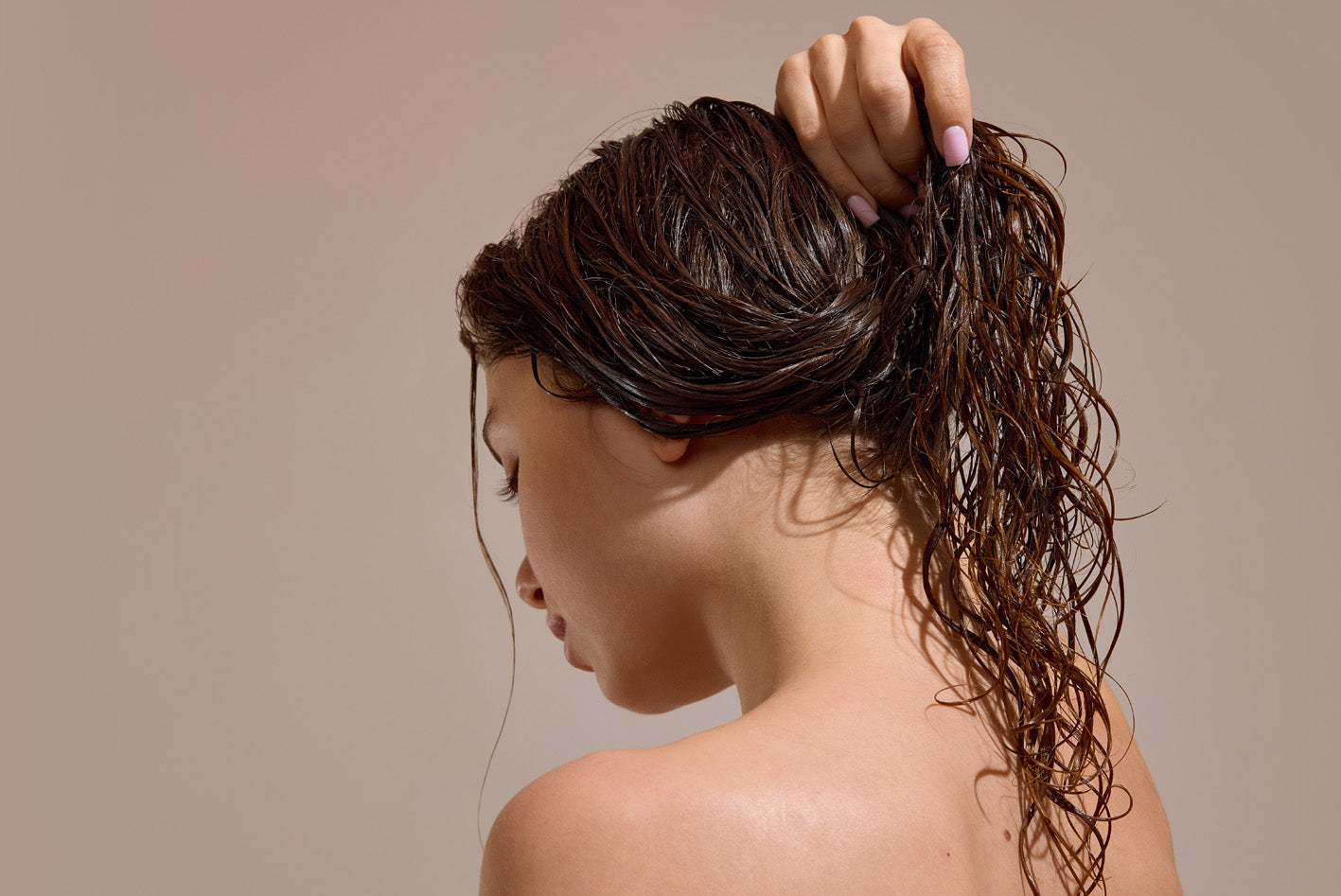
- Cleansing and activation phase: Forget about aggressive detergents that destroy the natural lipid barrier. Choose an advanced volumizing shampoo that is based on gentle surfactants and contains polymers that lift hair at the roots. Always wash twice. The first wash is to remove smog, dust, and styling product residue. The second is for active ingredients to work. Always lather the shampoo in your hands, never directly on your head, and then massage it with your fingertips only into the scalp. The foam running down the length of the strands is enough to refresh them without unnecessary rubbing of the cuticle.
- Nourishing and protecting phase: Here, an extremely important principle of proportion comes into play. For fine and delicate strands, apply conditioner only from ear height downwards. Light, gel-like consistencies based on humectants (aloe, hyaluronic acid, panthenol) work perfectly. If the strands require more intensive regeneration and the inclusion of richer substances, professional masks for fine hair will be an excellent choice. Use them as a pre-wash treatment (OMO method in a reversed, lighter version). Applying the mask to slightly damp hair twenty minutes before showering will allow valuable ingredients to penetrate the damaged areas, and subsequent washing will remove any excess film, leaving them soft, flowing, but incredibly light and lifted from the skin.
After showering, the crucial step is to blot out moisture. Forget about vigorously rubbing with a rough terry towel. Instead, gently press out excess water with a smooth cotton T-shirt or a microfiber towel. This simple action closes the hair cuticles and minimizes the risk of frizz, which so greatly disrupts the smooth surface of fine strands. Before reaching for the hairdryer, we move on to thermal protection and preparation for styling. Professional styling for delicate hair requires products in the form of a light mist or liquid. Avoid oils, creams, and heavy mousses. Spray a special volumizing lotion on the hair from the roots, and apply literally a drop of heat protection serum to the ends. Dry your hair upside down, using cool air at the very end, which will perfectly set the lift at the roots. Properly selected, high-quality hair care products can make it seem like you have twice as much hair.
Shaft architecture and its condition - how to precisely match cosmetics to skin and hair type?
Fine strands do not constitute a homogeneous group. This is only their structural characteristic, but their condition can drastically differ depending on your daily habits, chemical treatments, or genetics. A fine hair damaged by bleaching requires a completely different strategy than one accompanying an oily scalp. Distinguishing these subtle nuances is the secret of the most valued beauty experts. Understanding the needs of a specific subtype helps avoid the disaster of a flat, lifeless hairstyle. If you struggle with fine but extremely dry and damaged strands, you must be careful not to over-proteinize. Their structure is porous, causing them to quickly lose moisture. They require a PEH balance (proteins, emollients, humectants), but delivered in ultra-small molecules. Look for hydrolyzed silk or keratin, which will fill in deficiencies, and then seal them with the lightest oils, such as squalane oil, raspberry seed oil, or grape seed oil. Completely avoid coconut oil or shea butter. For fine and oily hair at the roots, working with the scalp is key. It is necessary to incorporate acidic enzymatic peels that gently dissolve accumulated skin cells, freeing the follicle openings. However, be careful not to over-dry. Skin from which all lipids have been removed will start producing even more. Here, tonics based on niacinamide or willowherb extract, which regulate gland function while maintaining optimal hydration, work perfectly. If you work in air-conditioned rooms, your hair may quickly lose its form during the day due to changes in electrostatic charges. In such cases, subtle hair mists that you can always carry in your bag are an excellent solution. A gentle mist restores the appropriate level of hydration without disturbing the hairstyle's structure. It is important to observe their reactions. Over time, you will notice which days in your monthly cycle require stronger cleansing and which require more hydration. This attentiveness pays off with phenomenal, healthy shine and elasticity that everyone around you will envy.
Summary - how to maintain a multi-dimensional form from early morning until evening?
Your daily journey with fine strands doesn't have to be a series of compromises between volume and nourishment. Discovering the ideal balance is a process that requires awareness, targeted, high-quality solutions, and a little patience in developing new habits. Remember that the beauty and lightness of your hairstyle come from holistic harmony. A healthy scalp, precise, two-step cleansing, skillful application of light conditioners only to the ends, and avoiding heavy, coating ingredients are the pillars upon which you will build the spectacular appearance of your hair. When you trust proven, technologically advanced substances and harmonize them with your internal biological rhythm, the results will appear faster than you expect. The correct drying technique with cool air, head down, supported by intelligent volumizing polymers, will maintain the desired shape for many hours. Your hair can be resilient, full of vitality, and sensual volume that will accompany you every step of your busy day.